10 Questions to Ask Before Hiring the Best Company Installer for Solar
By Abdus Salam
6 Views
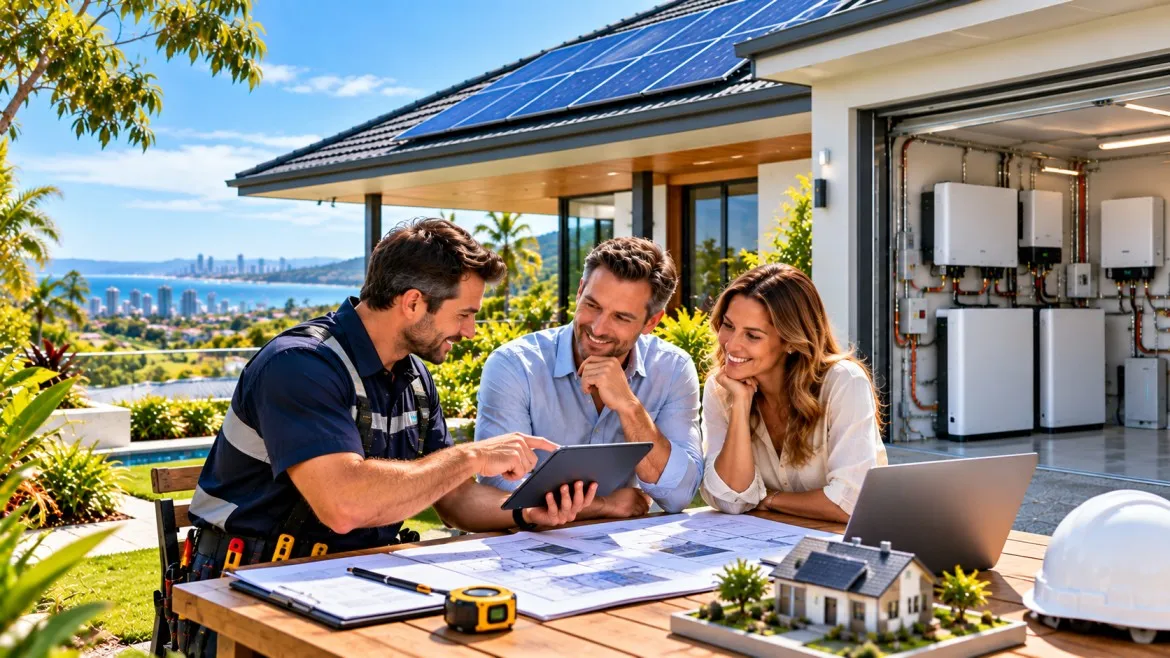
Solar is a long-term investment, so choosing the right installation company deserves more attention than simply comparing advertised prices.
A solar system involves several components working together, including panels, inverters, electrical equipment, monitoring and, in some cases, batteries and EV charging equipment.
The installation itself also needs to suit the property's structure and electricity requirements.
For that reason, homeowners and businesses searching for the best company installer should ask detailed questions before making a commitment.
Here are ten questions that can help make the comparison process more useful.
1. Will You Assess My Property Before Providing the Final Design?
A professional solar recommendation should take the actual property into account.
Roof orientation, shading, roof space, electrical infrastructure and energy consumption can all affect system design.
Ask whether the company will carry out a site assessment and what information will be collected during that process.
A remote quote can be useful for an initial estimate, but a site-specific assessment can reveal practical issues that may otherwise be missed.
The Australian Government's Solar Consumer Guide encourages consumers to research their options and ask questions when obtaining solar quotes.
2. Who Will Design and Install My System?
This question helps establish who is responsible for different stages of the project.
Some businesses manage sales while separate contractors complete installation.
Other businesses have in-house teams handling the installation.
Ask:
- Who designs the system?
- Who installs it?
- Are the installers licensed?
- Are they accredited?
- Are subcontractors involved?
- Who is responsible for workmanship?
Knowing the answer can make the project easier to understand before work begins.
Energy Solution Centre states that its solar installations are completed by in-house, CEC-accredited, licensed A-grade electricians and that it does not use subcontractors.
3. What Solar Products Are You Recommending?
Ask for the exact brands and models included in the quotation.
Do not settle for a proposal that only says "premium panels" or "high-quality inverter".
You should be able to find out exactly what equipment you are purchasing.
Depending on the project, this may include:
- Solar panel manufacturer
- Panel model
- Inverter manufacturer
- Inverter model
- Battery manufacturer
- Battery model
- Mounting equipment
- Monitoring platform
The Clean Energy Council provides approved product information that consumers can use when checking relevant solar PV modules, inverters and batteries.
4. How Is the System Size Calculated?
The system size should be based on the property's energy requirements.
Ask the installer to explain how the recommended size was calculated.
Factors may include:
- Annual electricity consumption
- Daytime energy use
- Evening energy use
- Roof orientation
- Shading
- Available roof space
- Future energy demand
- Battery plans
- EV charging
A larger solar system is not automatically better if the property cannot use or export the energy effectively.
Likewise, an undersized system may not achieve the energy goals you have in mind.
5. Can the System Support a Battery Later?
Even if you do not want a battery today, it can be useful to discuss future storage plans.
A battery can store excess solar energy and make it available later, including during periods when solar panels are not producing electricity.
The battery market has grown rapidly in Australia. Recent ABC News reporting highlighted the rapid increase in household battery installations and their growing role in Australia's electricity system.
Ask your installer whether the proposed solar system is compatible with future battery storage and what equipment would need to be changed or added later.
6. What Warranty Do You Provide?
There may be several warranties attached to one solar installation.
These can include product warranties for panels and inverters as well as separate installation or workmanship warranties.
Ask the installer to explain:
- Product warranty periods
- Workmanship warranty
- What labour is covered
- What happens if a component fails
- Who handles manufacturer claims
- What support is available after installation
Do not assume that every solar company offers the same level of workmanship protection.
A clear written warranty can make the ownership experience more straightforward.
7. What Happens If Something Goes Wrong?
This question is often overlooked before installation.
Ask what the process is if:
- The inverter stops working
- Solar production falls unexpectedly
- Monitoring stops working
- A panel develops a fault
- The battery reports an error
- A warranty claim is required
Find out who you contact and whether the installer assists with troubleshooting.
Ongoing support is especially relevant because a solar system is expected to operate for many years.
8. Do You Install More Than Residential Solar?
Experience across different project types can be useful when a property has unusual requirements.
Commercial properties may have large energy loads, while rural properties can have pumps, sheds, workshops or other equipment.
Some properties may also need off-grid solutions where grid connection is expensive or impractical.
Energy Solution Centre provides residential solar, commercial solar and off-grid systems, as well as battery storage and EV charging.
This broader experience can be useful for customers whose energy requirements extend beyond a standard rooftop solar installation.
9. Can You Explain the Quote in Plain Language?
A solar quotation can contain a lot of technical information.
You should be able to ask questions and receive straightforward answers.
A useful quotation should clearly explain:
- System size
- Number of panels
- Panel model
- Inverter model
- Battery details if applicable
- Installation costs
- Additional electrical work
- Monitoring
- Warranty
- Expected performance assumptions
- Total price
If you cannot understand what you are actually purchasing, it becomes difficult to compare the quote with another company's proposal.
A professional installer should be willing to explain the system without relying on confusing technical language.
10. What Happens After Installation?
Ask what the relationship looks like after the system is commissioned.
Some useful questions include:
- Is monitoring included?
- Will I receive system documentation?
- Who provides ongoing support?
- How are warranty issues handled?
- Can I add a battery later?
- Can I add EV charging?
- Is maintenance available?
A good solar installation should include a clear handover process so the customer understands how to monitor and use the system.
Why Local Knowledge Can Be Useful
Gold Coast properties can vary significantly.
A suburban home, a commercial building and a rural property may each require very different solar designs.
Local knowledge can also be useful when considering practical factors such as roof conditions, electrical infrastructure and the particular requirements of properties across the region.
Energy Solution Centre is located at 19 Price St, Nerang QLD 4211 and provides solar and renewable energy solutions throughout the Gold Coast.
The company specialises in residential solar, commercial solar, off-grid systems, battery storage and EV charging.
Solar, Batteries and EV Charging Are Becoming More Connected
Energy systems are increasingly being designed as interconnected technologies rather than separate purchases.
A household might generate solar electricity during the day, store surplus energy in a battery and use an EV charger to charge a vehicle at home.
The way these technologies interact can influence the system design.
For example, a household planning to charge an EV overnight may have different storage and solar requirements from a household without an electric vehicle.
Discussing these plans with your installer early can help avoid designing a system that needs significant changes later.
Product Approval and Consumer Protection
Product quality and consumer protection are important considerations when purchasing new energy technology.
The Clean Energy Council maintains approved product lists and also administers the New Energy Tech Consumer Code.
The NETCC programme covers consumer protection standards for participating sellers of technologies including solar, battery storage and EV charging.
The CEC also provides information explaining how consumers can check whether an installer is accredited.
These resources can form part of your research before selecting an installer.
What About Commercial Solar?
Businesses often have a strong opportunity to use solar generation directly because many commercial properties consume electricity during daylight hours.
However, every business has different operating patterns.
A warehouse, office, restaurant, retail store and manufacturing facility can all have very different electricity profiles.
A site-specific commercial assessment should therefore look at actual consumption rather than assuming a particular system size will work.
Recent ABC News reporting on the expansion of Australia's renewable energy scheme also highlighted the growing opportunity for businesses and agricultural properties to install larger solar systems.
What About Off-Grid Solar?
Off-grid solar requires even more detailed planning because the property cannot simply rely on the electricity network when solar production is low.
The system needs to balance generation, storage and consumption.
An off-grid assessment may consider:
- Daily energy demand
- Seasonal energy demand
- Solar generation
- Battery capacity
- Peak loads
- Backup generation
- Essential equipment
Properties with pumps, workshops or other large loads need to be designed accordingly.
This is why off-grid solar should generally be treated as a complete energy system rather than simply a larger rooftop solar installation.
Final Thoughts
Choosing the best company installer requires more than searching for the lowest price.
Ask detailed questions about system design, accreditation, products, installation, warranties, future battery compatibility and ongoing support.
A reliable solar project starts with understanding the property's energy requirements and then selecting equipment and installation methods that fit those requirements.
Whether you are considering a small residential system, a large commercial array or an off-grid solution, a clear and transparent conversation with the installer can make the process much easier.
Taking the time to understand the quotation before signing can help ensure that the final system is designed around your property rather than around a generic package.
FAQs
What should I ask the best company installer before choosing them?
Ask about site assessment, system design, installer accreditation, products, warranties, installation arrangements, monitoring and after-sales support.
Why is a site assessment important?
A site assessment can identify roof, shading, electrical and property-specific factors that influence system design and installation.
Should I plan for a battery when installing solar?
If you may want a battery later, discuss this with your installer before the initial system is designed. Compatibility can depend on the equipment selected.
Can solar installers work on commercial properties?
Yes, but commercial solar can involve different design and installation requirements from residential systems, so relevant experience is worth checking.
Is off-grid solar different from normal solar?
Yes. Off-grid systems need to provide reliable electricity without relying on the grid, so solar generation, battery storage and energy consumption need to be carefully balanced.